

Stay safe first
Do not climb onto a damaged or wet roof. Note what you can see from the ground and share photos taken safely.
Protect the home first, then plan the repair. A properly secured tarp keeps weather out while the permanent work is scoped.
A real person confirms the scope and any visit.
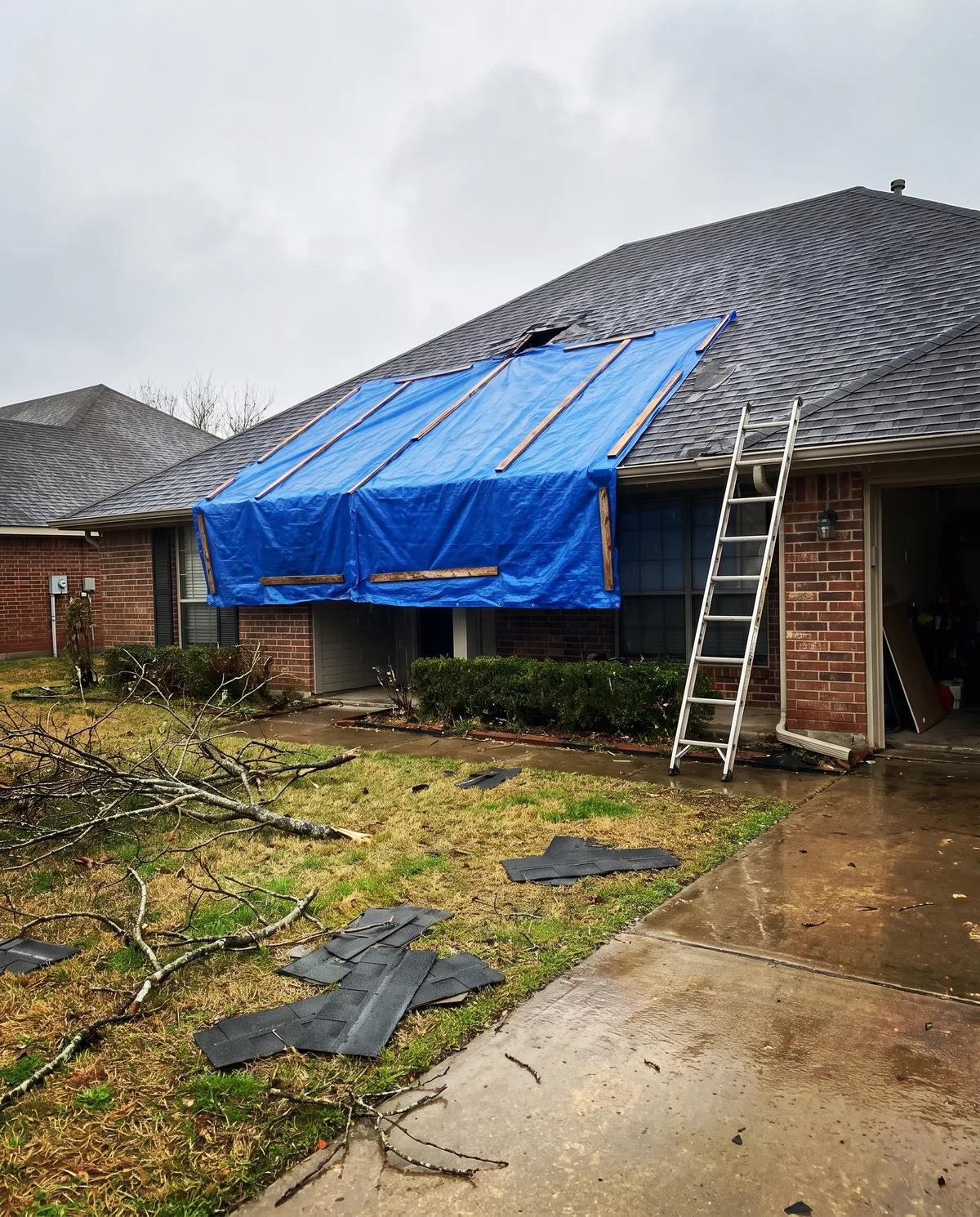
After a storm, a fallen limb or wind damage, the first job is often to cover the damaged area so more weather does not get in. Down South installs roof tarps as temporary protection and then talks through what the permanent repair needs. A tarp is a short-term measure, not a fix, so the next step is always an inspection and a clear scope.
Do not climb onto a damaged or wet roof. Note what you can see from the ground and share photos taken safely.
A tarp needs to extend past the damaged area and be secured so wind cannot lift it. Ask how it will be attached and how long it is meant to stay.
Photos of the damage before and after tarping help you and your insurer understand what happened.
Once the roof is covered, the team inspects it and discusses repair or replacement based on its condition.
Tell the team what happened, where the damage is and whether water has reached the inside of the home. Share photos if you can take them safely. Ask your insurer about any steps your policy expects after storm damage.
Ask about roof tarping and protection ↗A tarp is temporary. How long it lasts depends on the weather and how it was secured, so plan the permanent repair as soon as the roof has been inspected.
No. A tarp keeps weather out for now. The damaged materials still need to be repaired or replaced.
Yes. Down South handles roof repairs and replacements, and can inspect the roof once it is safe to do so.
Call (832) 530-0402 or send your project details. If a visit is needed, the team confirms it with you. You can also request a free inspection time.
Tell us what you need and where. We’ll talk through the project before confirming the work.